


Kitchen Cupboard with Doors: A 2026 Buyer's Guide

Table of Contents
- What Makes a Kitchen Cupboard with Doors the Right Choice
- Kitchen Cabinet Types and Configurations
- Kitchen Cabinet Door Styles That Fit Your Design
- Materials, Finishes, and Durability
- Freestanding Kitchen Storage Cabinet Options
- Kitchen Pantry Cabinet with Doors: Storage and Organization
- Replacement Kitchen Cabinet Doors and When to Choose Them
- Measuring, Fitting, and Installation
- Frequently Asked Questions
Last Updated: October 16, 2026
What Makes a Kitchen Cupboard with Doors the Right Choice
A kitchen cupboard with doors combines storage function with visual appeal, offering a practical solution for keeping your kitchen organized while maintaining the aesthetic you want. At Frugal Cabinets Online, we understand that choosing the right cupboard involves balancing style, durability, and budget, three factors that often feel at odds when you're planning a renovation.
The real decision isn't whether you need storage. It's whether you want that storage hidden or displayed, and what style matches your kitchen's personality. Open shelving shows off your best dishes and creates an airy feel, but it demands constant organization.
Most homeowners underestimate how much a kitchen cupboard with doors affects the entire room's character. The door style, finish, and configuration you select will influence traffic flow, lighting, and how functional your workspace actually feels. Below, we'll walk you through the exact factors that determine which cupboard is right for your space, your budget, and your lifestyle.
Kitchen Cabinet Types and Configurations
Understanding the difference between cabinet types is your first step toward a smart choice. Not all kitchen storage serves the same purpose, and mixing the wrong types wastes money and creates awkward gaps.
Wall Cabinets vs. Base Cabinets
Wall cabinets hang above your countertop and typically measure 12, 15, or 18 inches deep. They're ideal for storing everyday items you want within arm's reach: glasses, plates, bowls, and cooking staples. Base cabinets sit on the floor beneath your countertop and run 24 inches deep, providing heavier-duty storage for pots, pans, and larger appliances.
The choice between wall and base depends on your kitchen's layout and your reach. Kitchens with high ceilings benefit from wall cabinets because they draw the eye upward and create visual balance. Kitchens with lower ceilings feel cramped with too many wall cabinets, so base cabinets and open shelving work better.
Frugal Cabinets Online's Dover collection includes wall cabinets in multiple heights, 18, 24, 30, 36, and 42 inches, so you can customize your storage to your actual needs. For example, the Dover - Wall Double Doors W/Butt Doors 30" Tall costs $459.00 and provides substantial storage without overwhelming a standard kitchen.

Double-Door vs. Single-Door Layouts
A double-door cabinet opens from the center, with one door swinging left and one swinging right. This design maximizes visibility when you open it, you can see the entire interior at a glance without reaching around a single wide door. Double-door layouts also feel more balanced visually and work better in narrow spaces where a single wide door would swing into your walkway.
Single-door cabinets require less clearance and work well in tight corners or beside appliances. They're also slightly less expensive because they use fewer hinges and less hardware. But they force you to reach deeper into the cabinet, and you lose visibility quickly.
The Dover - Wall Double Doors W/Butt Doors 42" Tall ($591.00) represents a practical middle ground: tall enough to maximize wall space, wide enough to display your best pieces, and engineered for smooth operation over years of daily use.
| Configuration | Best For | Space Required | Visibility |
|---|---|---|---|
| Double-door | Displaying items, narrow kitchens | Moderate | Excellent |
| Single-door | Tight corners, minimal clearance | Minimal | Good |
| Combination | Balanced storage and access | Variable | Good |
Kitchen Cabinet Door Styles That Fit Your Design
The door style you choose sets the tone for your entire kitchen. This is where personal preference and practicality intersect.
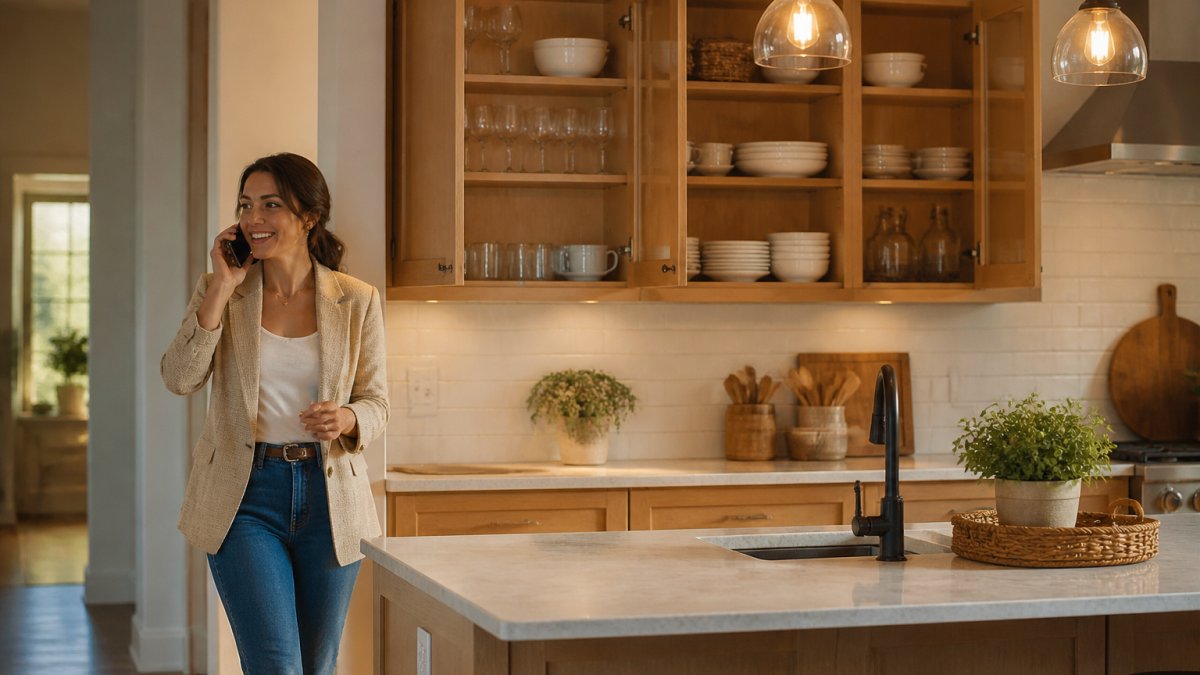
Shaker-style doors, flat panels with a simple frame, work in nearly any kitchen. They're timeless, affordable, and pair well with both traditional and contemporary design. Flat-panel doors feel more modern and simplified, ideal for minimalist kitchens.
The finish you choose matters as much as the door style itself. A natural wood finish showcases the grain and develops character over time. A matte finish feels contemporary and hides fingerprints better than gloss.
When you're selecting a kitchen cupboard with doors, think about what you're storing and how often you access it. Everyday items belong in cabinets at eye level with doors you can open quickly. Special-occasion dishes and serving pieces work fine in harder-to-reach upper cabinets.
Materials, Finishes, and Durability
The material your kitchen cupboard with doors is made from determines how long it lasts and how well it handles moisture and daily wear.
Solid wood construction offers durability and the ability to refinish if the surface gets damaged. Plywood construction, when done well, provides stability and resists warping better than solid wood in humid kitchens. Thermofoil (vinyl wrapped) cabinets are budget-friendly and easy to clean, but they can peel if exposed to excess heat or humidity.
Hardware quality matters more than most people realize. Soft-close hinges cost more upfront but prevent slamming and reduce stress on the cabinet box over time. Standard hinges work fine if you're careful, but they'll need adjustment as the cabinet ages. Drawer slides should glide smoothly under load, a sign of quality construction.
Frugal Cabinets Online uses solid wood frames with sturdy plywood construction and soft-close functionality across its collections. This combination balances durability with affordability, so you're not paying premium prices for features you don't need but aren't compromising on the construction that actually matters.
Freestanding Kitchen Storage Cabinet Options
Not every kitchen renovation involves built-in cabinetry. A freestanding kitchen storage cabinet gives you flexibility, especially in rental homes or if you plan to move soon.
Freestanding cupboards come in standard sizes, typically 24, 30, or 36 inches wide, and you can arrange them however your space allows. They're easier to install than built-in cabinets (often just leveling and securing to the wall), and you can take them with you if you move.
Freestanding cabinets work best in kitchens with irregular layouts, in pantry areas, or as supplemental storage. Pair them with open shelving or wall-mounted cabinets to create a cohesive look. Finish them with a kitchen cupboard with doors that matches your countertop color or wall finish so they feel intentional rather than temporary.
Dover - Wall Double Doors W/Butt Doors 36" Tall →
A freestanding unit is also the smart choice if you're unsure about your long-term kitchen plans. You can start with one cabinet, add more as your needs grow, and adjust the configuration without committing to a full renovation.
Kitchen Pantry Cabinet with Doors: Storage and Organization
A kitchen pantry cabinet with doors serves a specific purpose: keeping dry goods, small appliances, and overflow items organized and out of sight. Unlike a walk-in pantry, a freestanding pantry cabinet takes up minimal floor space while providing serious storage capacity.
The best pantry cabinets have adjustable shelves so you can customize the space for what you actually store. Tall, narrow cabinets work well in tight spaces. Wide cabinets with multiple shelves suit larger households or people who batch-cook.
Many homeowners treat a pantry cabinet as a secondary food storage area, keeping backup supplies separate from everyday cooking ingredients. This works especially well if your main kitchen cabinets are already full.
When choosing a kitchen pantry cabinet with doors, measure the height of your doorways and the width of your hallways. A tall pantry cabinet is useless if it won't fit through your kitchen entrance. Consider depth too: a cabinet that sticks out 24 inches will block traffic flow in a narrow kitchen but work fine in an open layout.
Replacement Kitchen Cabinet Doors and When to Choose Them
Sometimes you don't need new cabinets. You need new doors.
If your cabinet boxes are solid but the doors are scratched, warped, or outdated, replacement kitchen cabinet doors offer a budget-friendly way to refresh your kitchen.
Replacement doors work when your existing cabinet dimensions are standard. Custom sizes become expensive and defeat the cost advantage. Measure your current doors carefully: width, height, and depth. Verify that your hinges will accommodate the new doors (some older cabinets use different hinge styles).
Replacement kitchen cabinet doors are ideal for homeowners who like their layout but want a style update. Swap flat-panel doors for Shaker-style, change from natural wood to painted white, or upgrade from basic hinges to soft-close hardware. Each change impacts how your kitchen feels and functions.
The downside: if your cabinet boxes are damaged, warped, or not level, new doors won't hide those problems. They'll actually emphasize them. If your cabinets are sagging or doors don't close properly, fixing the underlying issue takes priority.
Measuring, Fitting, and Installation
This is where most DIY kitchen renovations go wrong.
Measure three times. Measure horizontally at the top, middle, and bottom of the wall, walls are rarely perfectly straight. Measure vertically at the left, center, and right. Note every obstacle: outlets, light switches, windows, pipes, and appliances.
Standard cabinet heights are 34.5 inches (base cabinets), 24 inches (wall cabinets), and 42 inches (tall pantry cabinets). But your kitchen might be different.
Installation difficulty depends on whether you're installing base cabinets, wall cabinets, or both. Base cabinets sit on the floor and require leveling. Wall cabinets require finding studs and using appropriate anchors, this is non-negotiable for safety.
Frugal Cabinets Online offers free design services to help you avoid these mistakes. Our team can review your measurements, verify that your cabinet choices will work in your space, and answer questions about assembly and installation.
| Step | Key Consideration | Common Mistake |
|---|---|---|
| Measuring | Take three measurements in each direction | Measuring only once, assuming walls are square |
| Planning | Account for obstacles and door swing | Forgetting about outlets or windows |
| Ordering | Verify cabinet dimensions match your space | Ordering standard sizes without checking fit |
| Installation | Find studs for wall cabinets, level base cabinets | Skipping the leveling step or using wrong anchors |
| Finishing | Caulk gaps, paint or stain as needed | Leaving gaps unfilled or mismatching finishes |
Choosing the right kitchen cupboard with doors means balancing style, durability, and budget. For example, the Dover - Wall Double Doors W/ 2 Butt Doors 24" Tall starts at $441.00.

Frequently Asked Questions
What is the difference between a kitchen cupboard and a cabinet?
A kitchen cupboard with doors typically refers to enclosed storage with hinged or sliding doors, while cabinet is a broader term covering any kitchen storage unit. Cupboards emphasize the door mechanism and closed storage, protecting contents from dust and creating a finished look. Both serve the same function in kitchen design, but cupboards specifically highlight the accessibility and visibility control that doors provide.
Can you replace kitchen cabinet doors without replacing the entire cabinet?
Yes. Replacement kitchen cabinet doors are a cost-effective way to refresh your kitchen without a full renovation. You can replace doors while keeping the existing cabinet box, frame, and hardware. This works well if your cabinet structure is solid but the doors are outdated, damaged, or no longer match your style. Measure your existing door openings carefully and verify hardware compatibility before ordering replacements.
What size kitchen cupboard with doors do I need for my kitchen?
Size depends on your layout, storage needs, and available wall space. Wall cabinets typically range from 18 to 42 inches tall and 12 to 36 inches wide. Base cabinets sit on the floor and are usually 34 to 36 inches tall. Measure your kitchen carefully, accounting for appliances, windows, and doorways. Consider your storage capacity needs: pantry cabinets hold more bulk items, while display-focused cupboards prioritize visibility. Free design services can help you plan the right configuration.
Are freestanding kitchen storage cabinets a good alternative to built-in cupboards?
Freestanding kitchen storage cabinets work well if you rent, want flexibility, or need extra storage without renovation. They offer portability and don't require installation, but built-in cupboards typically maximize space more efficiently and create a seamless kitchen look. Freestanding options are ideal for adding storage to a living room, dining area, or as a secondary pantry cabinet with doors in a kitchen that already has built-in cabinetry.

