


How Long Do Kitchen Cabinets Last? A 2026 Guide

Table of Contents
- How Long Do Kitchen Cabinets Last by Material
- Lifespan by Component: Hinges, Drawer Slides, and Finishes
- Best Materials for Durable Kitchen Cabinets
- Signs It Is Time to Replace Kitchen Cabinets
- Kitchen Cabinet Refacing: When It Makes Sense
- How to Make Kitchen Cabinets Last Longer
- Frequently Asked Questions
Last Updated: October 9, 2026
How Long Do Kitchen Cabinets Last by Material
The short answer: how long kitchen cabinets last depends almost entirely on what they are made of and how well they are built.
Cabinet lifespan is the expected number of years a cabinet box, door, and hardware assembly remains structurally sound and visually acceptable under normal daily use. That definition matters because "lasting" means different things to different people: a cabinet can hold its shape for decades while its finish looks tired after 12 years.
| Material | Typical Lifespan | Moisture Resistance | Best For |
|---|---|---|---|
| Solid wood | 50+ years | Moderate | Long-term homes, refinishing |
| Plywood | 25-30 years | Good | Damp climates, heavy use |
| MDF | 15-20 years | Poor | Painted doors, dry rooms |
| Particleboard | 10-15 years | Very poor | Rental units, tight budgets |
Solid Wood, Plywood, MDF, and Particleboard Compared
Solid wood remains the durability benchmark. It can be sanded, refinished, and repaired repeatedly, which is why older solid-wood cabinets often outlive the kitchens around them.
Plywood sits in the practical middle. Its layered construction resists warping better than solid wood in humid rooms, and it holds screws far more reliably than particleboard.
MDF offers a smooth, uniform surface that takes paint beautifully, which is why so many painted cabinet doors use it. The weakness is water: once MDF swells, it never returns to shape.
Construction Quality and Cabinet Boxes
Two cabinets made from identical materials can differ by a decade of service life based on joinery alone. Dovetail drawers, glued and screwed box joints, and solid back panels all resist racking far better than stapled or cam-lock assembly. When assessing a cabinet, it's wise to look at the box first, because doors and drawer fronts are replaceable while a failing box usually is not.
Lifespan by Component: Hinges, Drawer Slides, and Finishes
Cabinet boxes outlast their hardware, almost without exception. Hinges and drawer slides are mechanical parts with finite cycles, and they are the first things to fail in an otherwise healthy kitchen. This is the component-level view most lifespan guides skip.
- Hinges: Quality steel hinges with a warranty often run 15-25 years. Budget hinges loosen, sag, or snap far sooner, especially on doors opened dozens of times a day.
- Drawer slides: Entry-level epoxy slides may last 10-15 years. Full-extension ball-bearing or soft-close slides commonly reach 20-30 years with occasional lubrication.
- Cabinet finish: Painted or stained surfaces typically look worn after 10-15 years in a busy kitchen, long before the structure fails. Professional painting or refinishing resets that clock.
- Cabinet boxes: The structural shell, when made from plywood or solid wood and kept dry, frequently outlives everything attached to it.
The practical takeaway: if your boxes are sound but your hardware is tired, you are looking at a repair, not a replacement.
Best Materials for Durable Kitchen Cabinets
Plywood and solid wood are the best materials for durable kitchen cabinets in most homes, with plywood offering the strongest combination of moisture resistance, screw-holding strength, and cost. The right choice still depends on where the cabinets live.
For kitchens with a dishwasher, sink, or ice maker nearby, plywood boxes handle incidental moisture far better than MDF or particleboard. For upper cabinets in dry rooms, MDF doors with a quality painted finish perform well and cost less.
What most guides miss is that the finish matters as much as the substrate.
Signs It Is Time to Replace Kitchen Cabinets
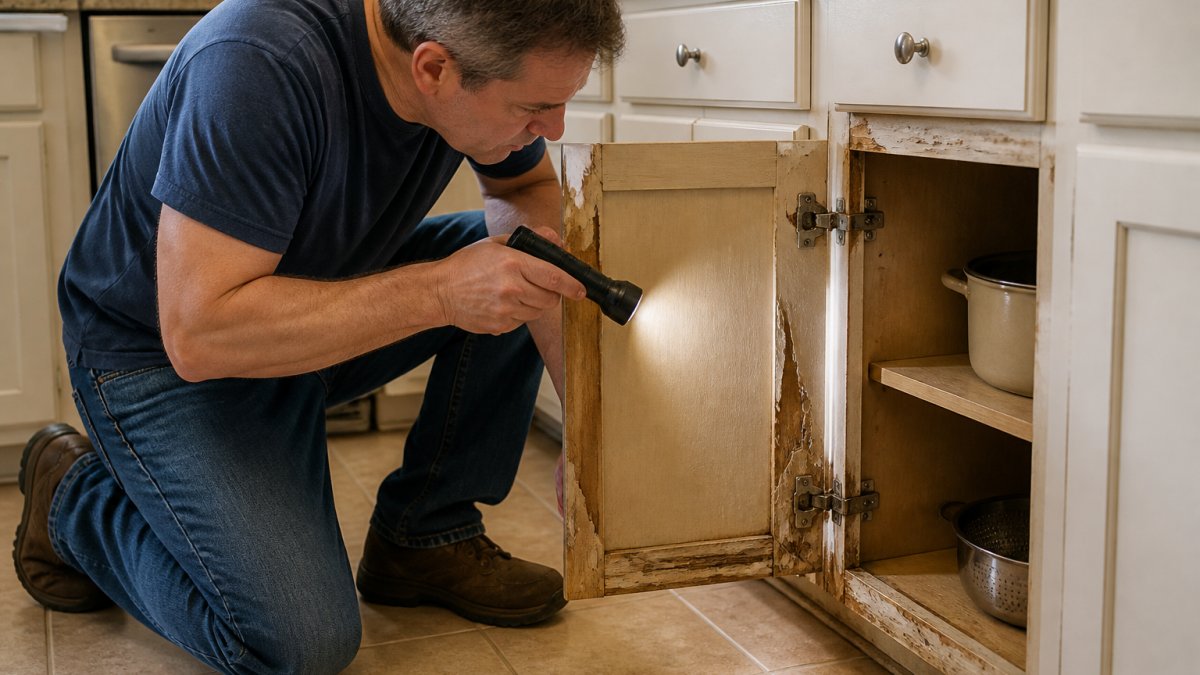
Replace kitchen cabinets when the box itself is failing, not when the finish looks tired. Structural damage, chronic moisture problems, and boxes that no longer sit square are the signals that repair money is better spent on replacement.
The Inspection Checklist
Walk through this before you decide:
- Doors sag and will not stay aligned after tightening hinges
- Drawer slides are loose in the wood because screw holes have stripped out
- Cabinet boxes are soft, swollen, or crumbling near the sink or dishwasher
- Shelves bow under normal loads
- Water damage or mold is visible inside or behind the boxes
- The layout no longer works and you want to reconfigure the space
What Each Symptom Actually Means
A sagging door is almost always a hinge problem, not a box problem. Hinges are cheap and replaceable, so this alone is never a reason to replace cabinets. Stripped drawer-slide screw holes are a middle case: a technician can drill out the hole, glue in a hardwood dowel, and re-drive the screw, but if three or more slides have stripped, the box material is telling you it has lost its holding strength.
The Repair-vs-Replace Math
A practical way to decide is to compare the cost of the repair against the remaining service life it buys. If a set of new hinges and slides costs a few hundred dollars and buys another 10 to 15 years on boxes that are otherwise sound, the cost per year is low and repair wins. If the boxes are 20 years old, made from particleboard, and showing moisture damage in two or more locations, a repair that buys five years is a poor trade against replacement that buys 25 or more.
When Refacing Beats Both
If your checklist flags only cosmetic issues, doors, and drawer fronts, and the boxes are square and dry, refacing is the middle path. It costs less than full replacement and avoids tearing out countertops and plumbing. The full cost comparison is in the next section.
Kitchen Cabinet Refacing: When It Makes Sense
Kitchen cabinet refacing makes sense when the boxes are structurally sound and the layout already works. Refacing replaces the doors and drawer fronts and applies a new veneer or laminate to the visible box faces, leaving the existing carcass in place.
This approach costs far less than full replacement and avoids the disruption of tearing out cabinets, countertops, and sometimes plumbing. It is a strong fit for homeowners who like their kitchen layout but dislike the look, and for anyone preparing a home for sale without a full remodel budget.
Refacing vs. Refinishing vs. Replacement
These three options are often confused, and the difference matters for both cost and outcome.
- Refinishing keeps your existing doors and drawer fronts and applies new paint or stain over them. It is the least expensive option and the least disruptive, but it only works if the doors are in good condition and the finish can be sanded or chemically stripped. It also does nothing for worn hinges, slides, or damaged box faces.
- Refacing replaces the doors and drawer fronts and covers the visible box faces with new veneer or laminate. It costs more than refinishing but delivers a more dramatic change and lets you upgrade to soft-close hinges and full-extension slides at the same time.
- Full replacement removes the boxes and installs new cabinets. It is the most expensive and disruptive option, but it is the only one that fixes a failing box, a bad layout, or water damage behind the cabinets.
What Refacing Does Not Fix
Refacing is the wrong call when the boxes are water-damaged, out of square, or made from failing particleboard. New fronts on a rotting box just hide a problem that will resurface. It also will not change your layout, add storage, or fix a cabinet that no longer sits level. If your inspection checklist flagged structural issues, replacement is the honest answer.
A Note on Warranty Coverage
Before you commit to any of these options, read the warranty that came with your cabinets or the one offered on the new work. Cabinet warranties vary widely, and most cover manufacturing defects in the box and hardware rather than the finish or damage from moisture, heat, or normal wear. A warranty that covers the finish for several years is a meaningful quality signal, while one that excludes finish wear entirely tells you the manufacturer expects it to fail first.
How to Make Kitchen Cabinets Last Longer
You can add years to your cabinets with a handful of habits that cost almost nothing. Maintenance, not luck, is what separates a 15-year kitchen from a 30-year one.
- Fix leaks immediately. A drip under the sink is the single biggest threat to cabinet life.
- Control humidity. Run the exhaust fan while cooking and address ventilation issues that trap moisture.
- Clean with a damp cloth, not a soaked sponge. Standing water is the enemy of every cabinet material.
- Tighten hinges and slides twice a year before they strip their screw holes.
- Re-caulk and reseal the cabinet floor under the sink every few years.
- Touch up chips and scratches early so moisture cannot reach the substrate.
Proper care and cleaning routines matter more than most homeowners expect. Cabinets that are wiped down, kept dry, and inspected regularly routinely outlast identical cabinets that are ignored.
Frequently Asked Questions
What is the average lifespan of RTA kitchen cabinets?
Ready-to-assemble cabinets typically last 15 to 25 years when built with plywood boxes and quality hardware, though some budget models with particleboard construction may show wear in 10 to 15 years. The lifespan depends heavily on material grade, hinge and slide quality, and how well the cabinets are maintained. RTA cabinets installed in dry, ventilated kitchens and kept clean tend to reach the upper end of that range.
Does the material of the cabinet affect its lifespan?
Yes, material is one of the biggest factors. Solid wood and plywood cabinets commonly last 25 to 50 years, while MDF and particleboard cabinets often last 10 to 20 years. Particleboard swells when it absorbs moisture, which weakens joints and causes doors to sag. Plywood resists moisture better and holds screws more securely, which is why it is the preferred core for durable kitchen cabinets.
How does humidity impact the longevity of kitchen cabinets?
High humidity causes wood and composite materials to absorb moisture, leading to swelling, warping, and peeling finishes. Kitchens without proper ventilation, or with leaks under the sink, are especially vulnerable. Running an exhaust fan while cooking and fixing leaks quickly can add years to cabinet life. In humid climates, plywood and painted finishes hold up better than particleboard with laminate.
Is it better to reface or replace old kitchen cabinets?
Refacing works well when the cabinet boxes are structurally sound and only the doors and drawer fronts look dated. It costs less and takes less time than a full replacement. If the boxes are swollen, sagging, or damaged by water, replacement is the safer choice. A quick inspection of hinges, slides, and box integrity will tell you which route makes sense for your kitchen.
Kitchen cabinets are one of the largest line items in any remodel, so getting the durability question right saves real money. Frugal Cabinets Online builds premium ready-to-assemble cabinets with the plywood boxes and quality hardware that actually extend service life, backed by flat 50% off on premium cabinets, free shipping on orders over $2,500, and free design services to help you plan a layout that fits. Plan your project with Frugal Cabinets Online and get cabinets built to last.

