


High-Quality Craftsmanship for Secure Cabinet Shipping

Table of Contents
- Why Craftsmanship and Shipping Protection Matter Together
- Best RTA Kitchen Cabinets: What Separates Quality from Flimsy
- RTA Cabinet Materials: Solid Wood, Plywood, and MDF Explained
- Cabinet Packaging for Shipping: How Damage Prevention Works
- How to Inspect Cabinets Upon Delivery
- Shipping Claims and Damage Resolution
- Total Cost Reality: Material Quality, Shipping, and Value
- Frequently Asked Questions
Last Updated: October 18, 2026
Why Craftsmanship and Shipping Protection Matter Together
When you order ready-to-assemble cabinets online, two things determine whether your renovation succeeds: cabinet shipping craftsmanship and how well it survives the journey to your home.
A beautifully crafted cabinet that arrives shattered is worthless, and a cabinet with weak joinery might survive shipping but fail within months of assembly. The best cabinet shipping craftsmanship means both elements working together: durable construction plus protective packaging designed specifically for RTA cabinets.
Best RTA Kitchen Cabinets: What Separates Quality from Flimsy
Ready-to-assemble cabinets range wildly in quality, and the difference comes down to construction methods and materials most shoppers never see until assembly day.
Hand-Built Construction vs. Mass-Produced Assembly
Hand-built cabinet boxes use traditional joinery, mortise and tenon joints, dowel reinforcement, and careful wood selection. Mass-produced cabinets rely on staples, thin fasteners, and minimal internal bracing to cut costs.
The difference shows immediately: a hand-built cabinet feels solid, joints fit snugly, and drawer slides glide because the box is square and rigid. A mass-produced cabinet feels loose, with visible gaps where pieces meet.
Joinery and Hardware That Holds Up
The joints between cabinet components determine longevity. Stapled joints fail; doweled and glued joints hold indefinitely if done correctly.
Hardware matters equally. Cheap drawer slides bind after a few hundred opens; premium slides rated for thousands of cycles stay smooth for years. Look for cabinets that specify their hardware suppliers. Look for cabinets that specify their hardware suppliers; budget suppliers often source generic hardware that works initially but deteriorates quickly.
RTA Cabinet Materials: Solid Wood, Plywood, and MDF Explained
Your cabinet box material directly affects durability, weight, and cost.
All-Plywood Construction vs. MDF Frames
All-plywood construction uses multiple layers of wood veneer glued under pressure.
MDF (medium-density fiberboard) is compressed wood fibers bonded with resin. It's cheaper and machines beautifully for detailed finishes, but it absorbs moisture readily and can swell or deteriorate.
For kitchen cabinets, plywood is superior. The cost difference isn't dramatic, and the longevity difference is substantial. Bathrooms with high moisture exposure should absolutely demand plywood.
Drawer Fronts and Door Quality
Cabinet doors take the most visible wear. Solid wood doors are beautiful but expensive and prone to warping. Veneer over plywood offers the look of solid wood with better stability. Painted MDF doors are budget-friendly but show damage easily. Drawer fronts should match the cabinet box material so uniform expansion and contraction with humidity changes keeps drawers from sticking or jamming.
Cabinet Packaging for Shipping: How Damage Prevention Works
How your cabinets are packaged determines whether they arrive pristine or damaged. This is where many suppliers cut corners, and where you can separate a real shipping operation from a drop-shipper with a website. The best high-quality craftsmanship for secure cabinet shipping is not a slogan, it is a stack of specific packaging decisions you can ask about before you buy.
The Packaging Stack, Layer by Layer
A properly packed RTA cabinet order is built from the pallet up. Each layer solves a different failure mode, and skipping any one lets damage through.
- Pallet base. Cabinets ship on a standard 48-by-40-inch wooden pallet, often a heat-treated GMA-style pallet rated for freight. It keeps the load off the trailer floor, allows forklift entry from four sides, and prevents the bottom cabinet from sitting in standing water or road spray. A flimsy or undersized pallet is the most common cause of a collapsed load.
- Bottom deck and slip sheet. A corrugated or plywood deck sits between the pallet and the first cabinet, spreading weight and preventing the cabinet's bottom edge from being crushed by pallet deck boards.
- Corner and edge protection. Rigid foam corner blocks, plastic L-profiles, or double-wall corrugated edge guards go on every exposed corner. Corners are where impact concentrates during forklift handling. A cabinet with a crushed corner is usually a total loss for that unit, because the box is no longer square.
Drawers and doors should be removed and packed separately, or at minimum secured with shipping blocks. Shipping them attached creates leverage points that snap hinges or crack frames during rough handling.
Crating vs. Palletizing: When Each Is Used
Not every order needs a full crate, and knowing the difference helps you ask the right questions.
- Palletized with stretch wrap and edge guards is the standard for full kitchen orders. It is cost-effective, forklift-friendly, and adequate when the load is dense and well-braced.
- Crated means the load is enclosed in a wooden or heavy corrugated box on the pallet. Crating is used for small orders, single oversized cabinets, glass or mullion doors, and any load that would otherwise be top-heavy or exposed. It adds cost and weight but is the right call when the load cannot protect itself.
- Loose parcel is only appropriate for small parts, hardware, and sample doors.
Ask your supplier which method they use for your order size and why. A supplier who cannot answer is not managing packaging, they are hoping.
Freight Handling and Why Packaging Has to Be Overbuilt
Most RTA cabinets require freight shipping due to weight and size. Freight carriers stack, load with forklifts, drop pallets, and move loads through terminals where a pallet may be handled a dozen times before it reaches you.
Standard parcel delivery (UPS, FedEx ground) works only for small cabinet orders; anything larger demands freight. Express freight means fewer handling points and terminal transfers, while standard freight means more chances for damage.
How to Inspect Cabinets Upon Delivery
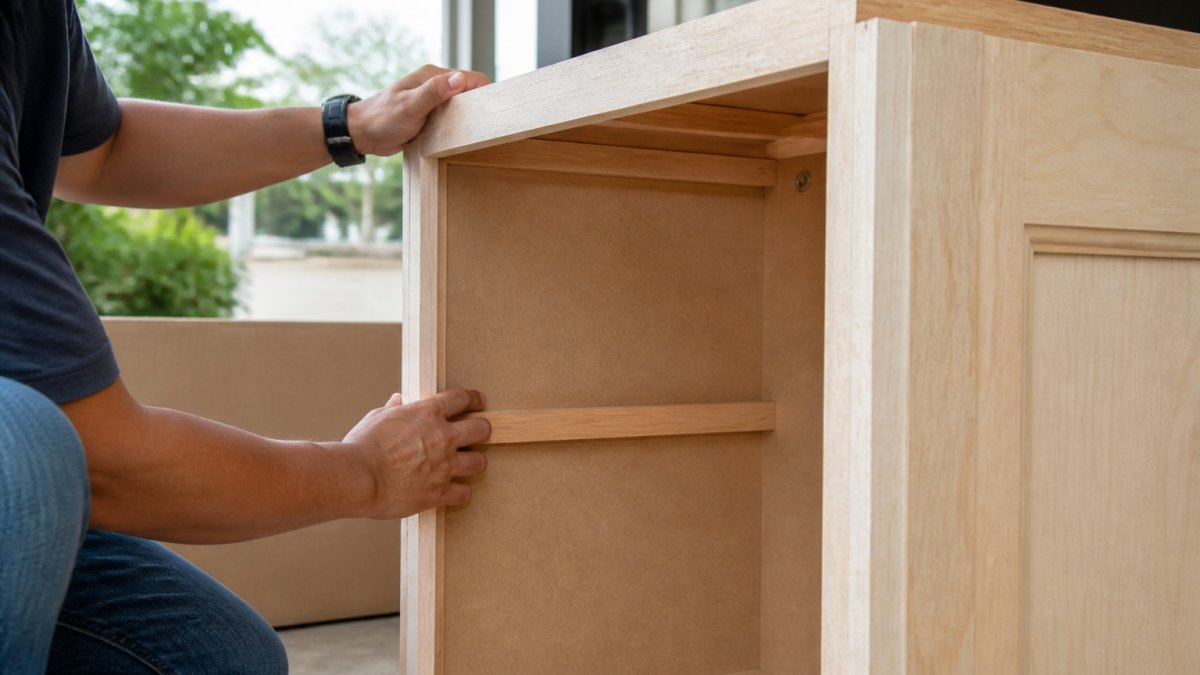
The moment your cabinets arrive, you have a narrow window to document damage. Most freight carriers require damage claims within 48 hours of delivery.
What to Check Before Signing
Before the driver leaves, inspect the pallet and boxes for crushed corners, water damage, or torn wrapping, and photograph the exterior condition.
Open boxes while the driver is present. Check the cabinet box for dents, cracks, or separated joints, test drawers and doors if included, and look inside at joinery, since gaps indicate damage or poor construction.
Don't sign the delivery receipt if you see damage. Write "Received with damage to [specific items]" on the receipt. This protects your claim.
Documenting Damage and Filing Claims
Photograph everything: wide shots showing the damaged cabinet in context, close-ups of specific damage, the shipping box exterior, the packing materials, and the cabinet interior.
Email photos to the supplier immediately with a description of what arrived damaged.
Keep all packing materials. Freight carriers often require them for damage investigation. Store them in a dry location for at least 30 days.
Shipping Claims and Damage Resolution
If damage occurred, your options depend on who's responsible and what your supplier's policy allows.
Supplier-caused damage (poor packaging, inadequate bracing) is the supplier's responsibility, and they should replace the cabinet or refund the cost.
The best protection is choosing a supplier known for meticulous packaging.
If you do experience damage, document it thoroughly and contact the supplier immediately.
Total Cost Reality: Material Quality, Shipping, and Value
Budget cabinets seem cheaper until you factor in shipping, longevity, and replacement costs. The number on the product page is not what you pay. What matters is total landed cost: the cabinet, the freight, the accessorials, and the expected cost of damage and replacement over the life of the kitchen.
The Line Items That Make Up Landed Cost
A freight-shipped cabinet order typically includes several charges beyond the cabinet price itself. Exact amounts vary by carrier, distance, and order size, so treat these as categories to budget for rather than fixed prices.
- Base freight. Charged by weight, class, and distance. Cabinet loads are heavy and bulky, so freight is a real line item, not a rounding error.
- Liftgate service. If you do not have a loading dock, the driver needs a liftgate to lower the pallet to the ground. This is a common residential charge and is often quoted separately.
- Residential delivery. Carriers charge more to deliver to a home than to a commercial dock, because of access, scheduling, and liability.
A supplier who quotes a single shipping number without mentioning these categories is either absorbing them or surprising you later. Ask for an all-in delivered quote to your address before you commit.
The Damage Cost Nobody Budgets For
Damage is the hidden line item in cabinet shipping. When a cabinet arrives damaged, the visible cost is the replacement unit. The real cost includes:
- Return or disposal freight for the damaged unit.
- A second delivery for the replacement, sometimes with the same accessorials again.
- Schedule delay. A renovation stalled for two to four weeks while a claim is processed costs money in labor rescheduling, storage, and sometimes temporary kitchen expenses.
- Claim friction. Freight claims can take weeks and require photos, packing materials, and signed delivery receipts. A supplier with poor packaging shifts that burden onto you.
This is why packaging quality is a cost variable, not a nice-to-have. A supplier that overbuilds packaging is effectively prepaying part of your damage risk.
Comparing Cabinets on Cost per Year of Service
A low-cost cabinet might cost $200 per unit with $50 per unit in freight. If it fails within two years and needs replacement, your total cost is $250 per unit plus the hassle of a second renovation.
The comparison only works if you use landed cost, not sticker price. Two suppliers can quote the same cabinet price and deliver very different total costs once freight, accessorials, and damage risk are included.
Shipping costs do not vary much between reputable suppliers for the same cabinet size and destination. What varies is whether the cabinet arrives damaged and how quickly the supplier resolves it. Damage means additional shipping for replacements, project delays, and stress. The real value equation is total cost per year of service, and the supplier who protects the shipment is usually the cheaper supplier in the end.
Frequently Asked Questions
How can you tell if RTA cabinets are well made?
Well-made RTA cabinets use all-plywood construction, not MDF frames with particle board backs. Inspect the joinery: look for reinforced corners, dowels or mortise-and-tenon joints, and sturdy hardware. Open and close drawers and doors smoothly, they should not bind or wobble. Check that the cabinet box sits square and level. Premium RTA cabinets from quality suppliers feature hand-built components and thicker materials that resist warping during shipping and assembly.
What should I inspect when my cabinets are delivered?
Before signing the delivery paperwork, inspect each cabinet box for external damage: dents, crushed corners, or torn wrapping. Open boxes to check interior components for cracks, warping, or loose parts. Verify that all hardware, doors, and drawer fronts are included and undamaged. Test drawer slides and hinges. Document any damage with photos immediately. Do not accept the shipment if you spot significant damage, note it on the delivery ticket and contact the supplier within 24 hours to file a claim.
How are cabinets packaged to prevent shipping damage?
Quality suppliers use multi-layer protection: foam padding or bubble wrap around each cabinet, internal bracing to prevent shifting, and heavy-duty cardboard boxes. All-plywood cabinets are less prone to damage than MDF because they resist impact better. Freight shipping with signature confirmation offers better protection than standard parcel delivery. Premium packaging includes corner guards and edge protectors on doors and drawer fronts. Reputable suppliers invest in protective packaging because damage claims cost more than quality packing materials.
What happens if my cabinets arrive damaged?
Contact your supplier within 24 hours with photos of the damage. Most reputable RTA cabinet suppliers cover shipping damage under warranty if you document it at delivery and report it promptly. The supplier will either ship replacement components or a full replacement cabinet, depending on the damage severity. Keep all packaging materials and photos until the claim is resolved. Some suppliers offer freight insurance as an add-on. Always inspect cabinets before signing to protect your claim eligibility.

